Supernatural historical fiction works because it does not ask readers to choose between fact and imagination. It takes the texture of real history—old ships, wartime records, missing documents, buried legends—and places a mystery inside it that refuses to stay explainable. For U.S. readers who enjoy layered fiction, this blend combines the satisfaction of historical storytelling with the rush of mystery, suspense, and the paranormal.
The best stories in this space use history as pressure. A strange artifact, a missing crew, a sealed container, or a classified wartime program becomes more frightening because it feels connected to something that might have happened. That is why supernatural mystery books and supernatural thriller books often stay with readers long after the final page. They create one persistent question: What if the official version was never the whole story?
What Is Supernatural Historical Fiction?
Supernatural historical fiction places paranormal or unexplained events inside a historical setting. The story may involve ghosts, curses, ancient relics, haunted locations, forbidden rituals, maritime legends, secret societies, or events that appear impossible to explain through ordinary logic. The historical side gives the story weight. The supernatural side gives it danger, wonder, and dread.
In simple terms, the genre asks: What happens when the past is not finished with us?
A novel in this category might begin with World War II, ancient Egypt, the age of exploration, or the aftermath of a forgotten maritime disaster. Then it introduces a mystery that history alone cannot fully contain. A diary entry contradicts the official record. A ship disappears and returns with no living crew. A relic passes through centuries of violence. A myth begins to look less like fantasy and more like a warning.
This is where the genre becomes addictive. Readers are not only following characters; they are investigating the past alongside them. Every clue matters because it may carry both historical meaning and supernatural consequence.
Why Readers Love Supernatural Mystery Books
Supernatural mystery books appeal to readers because they turn curiosity into tension. A traditional mystery begins with a crime, a disappearance, or a secret. A supernatural mystery adds another layer: the possibility that the answer may not be entirely human.
That uncertainty is powerful. Readers want clues, but they also want atmosphere. They want hidden rooms, old documents, coded messages, family secrets, suspicious witnesses, and strange patterns that do not fit the obvious explanation. When the supernatural enters the story, every detail becomes more charged. A cold room is no longer just a cold room. A repeated symbol is no longer just decoration. A missing logbook may point to a cover-up, a curse, or something older than the people trying to solve it.
Readers who enjoy investigative documentaries, true-crime storytelling, historical podcasts, and conspiracy-driven thrillers often respond strongly to this kind of fiction because it feels like a case file with a pulse. It rewards close reading and makes the next page feel like the one piece of evidence that could change everything.
Strong supernatural mystery books also respect intelligence. They build patterns, ask readers to compare testimony, and make silence feel meaningful. That kind of storytelling creates trust—and trust is what keeps a reader turning pages.
How Supernatural Thriller Books Create Fear and Tension
Supernatural thriller books are built on escalation. The mystery may begin quietly, but the threat grows sharper with every chapter. Unlike a standard mystery, where the primary question is “Who did it?” a supernatural thriller often asks “Can it be stopped?”
Fear in this genre comes from danger, pacing, atmosphere, and paranormal pressure. Characters may be hunted, cursed, deceived, or trapped. Clues do not simply explain the past; they raise the stakes in the present. Setting becomes part of the danger, whether the story unfolds on a ship, in an archive, near a battlefield, or inside an abandoned building. The paranormal element makes every decision riskier because the characters face something that does not follow normal rules.
That is the tension that supernatural thriller books do so well. They place rational people in irrational circumstances and force them to keep moving.
The Power of a Ghost Ship Supernatural Thriller
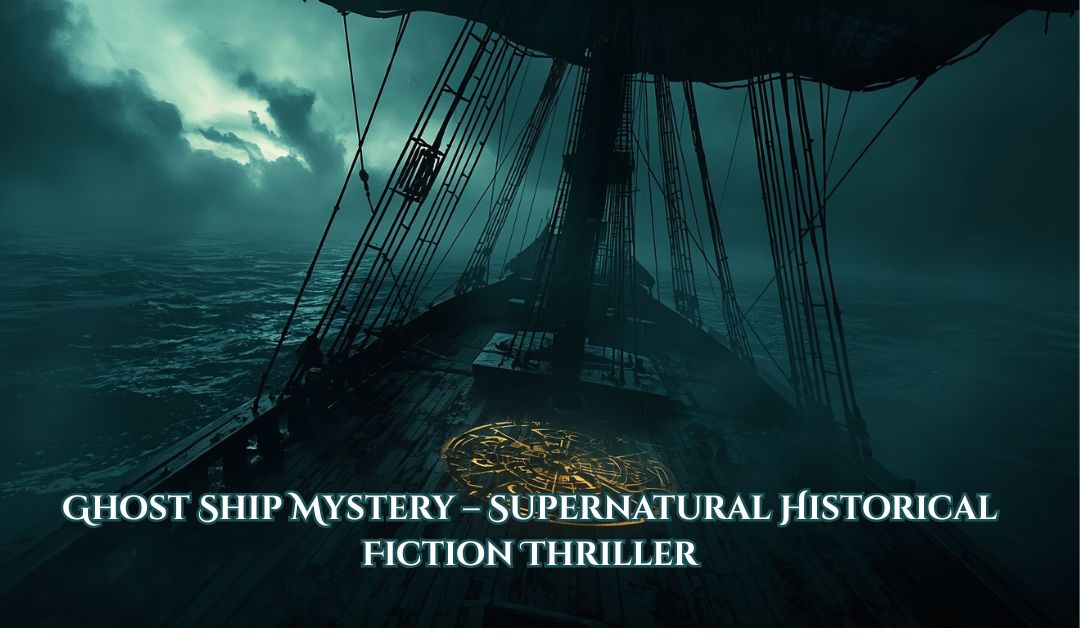
Few settings are better suited to supernatural suspense than a ghost ship. A ghost ship supernatural thriller begins with a naturally terrifying idea: isolation. A ship at sea is cut off from ordinary safety. There are no neighbors, no quick exits, and no easy way to verify what happened. The ocean itself becomes part of the mystery.
Ghost ships carry built-in narrative power because they combine several fears at once: a lost crew, a silent vessel, unknown cargo, broken communication, darkness, distance, and legends that grow stronger with each retelling. Whether these stories are based on disaster, crime, misunderstanding, or legend, they give supernatural historical fiction a perfect stage.
A ghost ship thriller also makes history feel physical. The reader can imagine the deck, the locked rooms, the radio message, the smell of salt, and the silence after panic. When a story adds a paranormal element—a cursed object, an opened container, a forbidden relic, or a crew frozen by terror—the ship becomes more than a setting. It becomes evidence.
History, Fear, and the Unknown: A Perfect Story Combination
The strongest supernatural historical fiction succeeds because fear becomes more intense when it feels anchored in reality. A purely invented monster can be frightening, but a mystery connected to a real war, maritime route, intelligence file, or cultural legend feels harder to dismiss. Historical detail gives the reader a foothold. Once that foothold is established, the supernatural twist becomes more unsettling because it appears to grow out of the record rather than sit on top of it.
This is where David M. Dye’s storytelling position fits the genre. His work focuses on the edge between documented history and unanswered questions: maritime legends, wartime conspiracies, suppressed records, mythology, and the thin line between fact and speculation. That approach appeals to readers who want more than entertainment. They want a story that feels researched, atmospheric, and intellectually alive.
For modern readers, this matters. Supernatural historical fiction taps into the awareness that not every official explanation feels complete. It transforms research into suspense and turns forgotten history into a living threat.
Conclusion
Supernatural historical fiction is addictive because it gives readers multiple pleasures at once: the depth of history, the puzzle of mystery, the speed of a thriller, and the eerie charge of the paranormal. It invites readers to explore haunted places, lost records, strange artifacts, ghost ships, and legends that may contain more truth than anyone expected.
For readers who enjoy supernatural mystery books, supernatural thriller books, or a ghost ship supernatural thriller filled with atmosphere and unanswered questions, this genre offers a rare experience. It does not simply ask what happened. It asks what survived, what was hidden, and what should never have been opened.
If you enjoy stories where history fractures, evidence matters, and the unknown waits just beyond the official record, supernatural historical fiction is a genre worth exploring—and David M. Dye’s world of maritime legend, mythology, and dark historical suspense is a strong place to begin.